Sunday, 1 May 2016

Backpacker Life [ii] - The Accommodation

Hostel Life:
If the backpack is the raison d'être of the budget traveller, then the backpacker hostel is his/her lifeblood. It is both the glue the binds a sequence of travel experiences and the source of social interaction that can often help to define an entire trip. The hostel's primary function, as indicated by its very name, is to provide a safe haven to recover from interminable bus journeys or day-long hikes, a welcoming oasis of warmth and comfort to be appreciated after the rigours of third world travel. Once this function has been fulfilled, however, it progresses to its secondary and more complex role: providing the opportunities for social stimulation.

Social Interaction:
Simply put, anything goes in the melting pot of international culture that is the modern-day backpacker hostel. Doors to myriad social adventures are opened at the drop of a simple "Hello..." and any sentiment of social inadequacy goes out of the window in this most unforgiving of environments. Introverts, extroverts, party animals, loners and sociopaths are thrown together to create a heady cocktail of contrasting personalities in the already intense context of shoestring travel. Connections are made and discarded in an instant, based on immediate like or dislike. Encounters are paradoxically superficial and profound, the brevity of any relationship being offset by its intensity. Just as I will probably never see Nick and Vivian again, neither will I ever forget the disarming candour with which we spoke of our life hopes and experiences on the rooftop of the Hilton in Windhoek - an evening that would categorically not have happened had we not exchanged the briefest of dormitory greetings.

Amenities & Facilities:
The three most important things to consider when rating a hostel are WiFi, WiFi and WiFi; closely followed by the quality of the free breakfast. The walls could be covered in bloodstains and the shower smell like an open sewer in Mumbai, but if a backpacker can stream Season 6 of Game of Thrones and make uninterrupted WhatsApp calls on reliable 4G bandwidth, and have three types of fruit jam, the hostel is a winner. Despite its traditional image as a low budget form of travelling for poor students and permahippies, backpacking is a big and profitable business: the more ways a hostel has to make a backpacker part with his/her cash, the more lucrative the stay. Bar, kitchen, tour desk, laundry, taxi service - these are all services a backpacker will use if available, particularly if the outside world is out of bounds after dark. My dormitory bed may have only been $12 a night, but my total bill for a recent three night stay came to $150 (Editor's note: not all at the bar). Multiply that by eight beds and you have a highly profitable room.

Resident Hierarchy:
Social ranking in the backpacking world is based on occupancy duration, with stays of one or two nights rarely eliciting more than the customary politeness reserved for paying guests. For longer or more memorable stays, a hostel can start to acquire the lofty status of home away from home. Thus, at the Fat Cat in Kampala, I am bestowed senior status on day three and am always greeted by name by owner, receptionist and cleaner. On the morning I am due to leave after a five day residency, I am handsomely rewarded for the longevity of my service by being exempt the $0,50 towel charge and the allocation of an extra pancake at breakfast. This is the backpacker world equivalent of elevation to silver status on British Airways' Executive Club.

Backpacker Nirvana:
Every so often, the right mixture of all of the above elements will combine to create a hostel experience that is so close to perfection that it is admitted to the pantheon of phenomenal travel memories. With its beautiful pool and siesta-inducing cabanas, vibrant bar and surprisingly good kitchen, and most importantly a perfect combination of fantastic staff and fellow travellers, South Coast Backpackers in Kenya has ensured that I will be the first person to visit Diani Beach for three days without actually ever seeing the beach. Esther, Ali and Paul's supreme standards of hospitality coupled with the midnight psychoanalysis sessions of the newly formed Failed Romance Club and a fantastic night pool party mean that my only experience of Kenya on this occasion will not involve animals or national parks but the gated compound of the best backpacker hostel of the trip.

And the winner is...

South Coast Backpackers, Diani Beach

Its beautiful swimming pool...

Its cosy cabana nests...

 Its deep and meaningful conversations...

Its not so deep and meaningful behaviour...

Mood food: Chef's remarkably good spaghetti carbonara

Monday, 18 April 2016

Big In Korea

The whispers began to circulate before the plane had even taken off from Beijing airport, but it was not until dinner on our first night in the Democratic People's Republic of Korea that the rumour was confirmed: for the first time in the history of the event, the 29th edition of the Pyongyang Marathon would not start and finish in the 50,000 capacity Kim Il-Sung Stadium due to renovation, but in the Rungrado 1st of May Stadium. Almost as an afterthought we are also informed that this happens to be the world's largest stadium and that we can expect more than half of its 150,000 capacity to be filled for our guest appearance.

There is more than enough to distract us from any thoughts of impending athletic glory during our visit of the North Korean capital over the following 36 hours, but there is a clearly discernible buzz amongst the runners. Like many of the other sports fanatics who have made the journey to this hermit state, I cannot help but relive one thousand childhood dreams of FA Cup Final appearances or leading any of my many countries of origin out onto the sporting field. And why not? Every dog has his day, after all, though in Korea this is more likely to be in the shape of a gourmet appetiser for a high-ranking military official.

An acclimatisation visit to the 1st of May Stadium on the eve of the race partly confirms some of our hopes and expectations: the stadium is an absolute beast, a colossal internal bowl of 150,000 seats flanked by sixteen stunning magnolia blossom shaped external arches, and for a second I wish I could attend the Mass Games for which the country is famed. It isn't until the following morning, however, when we are led into the athletes' preparation area and field access passage deep within the bowels of this gargantuan sporting arena, that we realise that something very special is about to happen. For once, the light at the end of the tunnel is very much literal rather than figurative, and all eyes and cameras are on the man holding the sign that announces my group as 'Amateur 1'. He is all that stands between us and North Korean stardom.

Then the moment arrives, a few minutes before the opening ceremony is due to start at 9am. Our bannerman moves forward and we walk out of the tunnel semi-darkness and onto an athletics track to the truly unforgettable, once-in-a-lifetime sight of 90,000 North Koreans warmly welcoming us into the world's biggest stadium to a background of rousing marching music. As athletes. The mass anticipation and nervous excitement from the tunnel are immediately replaced by collective shock, awe, disbelief and wonder as our jaws drop in the face of such extraordinary scenes. We gasp, we wave, we photograph. I drink in every single moment, aware as it is happening that I will never experience this feeling again in my lifetime. Words fail me completely and utterly.

We troop slowly around the track and onto the field in carbon copy choreography of an Olympic Games athlete nations' entrance parade, lining up behind our respective banners. To the right of the field, facing the DPRK top government and military officials, are the elite athletes: an Ethiopian, a Kenyan and two Zimbabweans representing the sport's traditional powerhouses; a predictably sizeable contingent from China and Russia; and the remainder and bulk of the professional athletes from the home nation. To the left of the field, theoretically facing the same local hierarchy but too busy committing this astonishing situation to digital posterity: a motley crew of one thousand international amateurs experiencing their fifteen minutes of sporting fame.

In the few moments of reflection that I have while my mind recovers from an unprecented bout of extreme sensory overload and before the race begins, I realise with great delight that these are memories that I will be able to relive and share, unusually. I may have been travelling around Africa by myself, but one of my oldest and dearest friends has flown from London to join me on this short escapade; three of my Antarctic co-adventurers have also made the journey, needing only the vaguest of suggestions on my part to reform our successful partnership. I am already looking forward to revisiting these very special moments at our next encounter, wherever that may be. With the marathon returning to the other stadium next year, we will bask in the knowledge that no other foreign athlete will ever have this experience,  In the meantime, however, the sound of a starter pistol means that I have four hours of running ahead of me...


WATCH: My crappy video of our triumphant entrance into the stadium

Well hello, big boy...

Pre-race team photo

Waiting nervously in the tunnel

Waving to our adoring fans...

Lining up next to the elite athletes

4 hours later...

Mood food: raspberry energy gels

Thursday, 14 April 2016

Swiss Timing

The traffic is snarling, that really is the only way to describe this pre-dawn suburban Nairobi logistical catastrophe. Our coach is currently stranded in an ocean of vehicles facing so many different directions as they attempt to find an escape route that it seems as though the world's largest magnet has drawn them unexpectedly to this epicentre of metallic chaos. Both my British queuing sensibilities and my Swiss need for order and punctuality are being stripped from me, layer by layer. We have not moved in ninety minutes and word has just drifted from the carbon monoxide airwaves that a petrol tanker has overturned six kilometres ahead. That the previously uninterrupted cacophony of minibus, boda-boda and car horns has stopped like a mutually agreed ceasefire in the early morning traffic hostilities bodes no better than the fact that most coaches have disgorged their bored passengers onto the fractured asphalt to stretch their weary legs. We are going to be here for a while.

As comfortable as I am initially, safely ensconced in my faux-mahogany and leather VIP class armchair seat and with a combined total of seventeen US TV series seasons on my laptop, my travel-planning muscles nevertheless start to twitch a little as the clock minute hand ticks closer to 5am. If it takes us more than an hour and a half to reach Nairobi central bus station, as there can be no doubt it will, then I will miss my onward connection to Dar es Salaam. As unexcited I am at the prospect of a further eighteen hours on a coach, missing this bus will almost certainly mean missing my flights to Abu Dhabi, Beijing and my final destination of Pyongyang in North Korea. I silently curse myself for making the only rule of this trip that no air travel is permissible within Africa.

Having shared my concern with the three members of the coach crew on two previous occasions, they can almost sense the heightened pitch in my voice even before I speak to them. "Sir, we think you must now take a boda-boda." The solution suggested had been swirling through my mind since the germination of my first seed of worry, but I was supremely reluctant to take my favourite form of East African transport for two very important reasons. Riding pillion on a motorbike with a total stranger, laden with three backpacks and daypacks, might seem a deranged idea at the best of times, but doing so at 4:30am in a city affectionately nicknamed 'Nairobbery' by locals and visitors alike would enter the realms of the terminally insane.

"Sir, come now, we have a boda-boda." He is right, I have no choice. As I step off the bus, I feel as though I should cast a final wave over my shoulder to my fellow passengers. Au revoir mes amis, and into the breach. My spontaneous travel agent has stopped the first motorcyclist riding alone, a young fellow with a face that is neither reassuring nor intimidating. As I move to launch the backpack onto my shoulders in an arc-like motion by now as fluid as a golfer's swing, so rehearsed is it, I am surprised to feel it being grabbed from me. Putting it over his back, the coach driver smiles at me: "No Sir, I cannot let you go alone. I will be your escort, for safety."

And so we drive off on the bumpy hard shoulder, between the never-ending rows of cars and through any gap available: the boda-boda driver with my running kit bag wedged between his thighs; me with my daypack strapped to my chest and a bottle of water in hand; and the coach driver behind me with my backpack on his back - a human double airbag transforming me into a pre-dawn Kenyan motorbike sandwich. Progress is slow initially as we weave in and out of traffic like a motorized ski slope slalom circus act, but once we pass the overturned tanker he opens the throttle and we shoot forward into the new day and Nairobi proper. Any boda-boda ride is an exhilarating affair, an adventure into the unknown, but a boda-boda ride against the clock and in such unconventional circumstances is simply magical.

We make it to the bus station with ten minutes to spare and I high five my crew with sheer, undisguised relief. Only then do I remember the second reason I did not want to resort to this course of action: with both my bank cards having been rejected by the last four ATM machines, I have not a single cent to my name. As the boda-boda driver looks at me expectantly, I take off my watch without hesitation and offer it to him with the gritty but fair stare of a spaghetti western anti-hero. But he is confused and I worry that he will not go for the deal, an outcome that would pose both a real and moral dilemma as I have no intention of parting with iPod, phone or camera - the next upgrades in the bartering order of ascendant value.

Again, the coach driver saves the day. "Swatch?", he asks knowledgeably. I acquiesce. He takes the timepiece from my hand and gives the driver the KYS 500, or $5, that he is owed for his prestation. "I like it." We both smile and shake hands solemnly as I board my next bus. Another day, another adventure.

Mood song: Connection - Elastica
Mood food: roadside stand rich tea biscuits

Tuesday, 12 April 2016

Saved By The Ball

The rain, when it came, wasn't entirely unpleasant; the relative temperatures of both water and air were more than bearable and the darkening skies made the brooding hills seem even more dramatic. In a remarkably uncharacteristic display of forward planning, I had even thought to bring my backpack's impermeable cover to protect my belongings from the elements. The worst of what was clearly an incoming thunderstorm, as testified by two quick forks of lightning, appeared to be heading east and over the mountains to my left. I wasn't in any immediate danger. Nevertheless, the undeniable fact remained that I was hopelessly lost in a one man kayak somewhere in the middle of Lake Bunyonyi in South West Uganda, two hours from nightfall and with no-one else to be seen in any direction.

Today was exactly the kind of day I had imagined and hoped for when first planning this voyage. For reasons unknown even to myself, my concept of ultimate freedom has always equated to floating on a vast expanse of water with only a thin hull of rotomolded polyethylene separating me from the murky depths lurking beneath. With only two previous outings to my name in forty-one years of existence I can hardly lay claim to kayaking pedigree of Olympic proportions, but the mere thought of dipping paddle into water has always conjured feelings of peace and tranquility. I could barely contain my excitement.

The plan for the day was a straightforward one: I was to launch my flagship vessel into the lake at 10:00 sharp and head for the eco-resort of Byoona Amagara on Itambira Island, where I would have a well-deserved organic lunch of locally-grown produce and an ice cold beer in the sun. My stomach pleasantly sated and muscles reinvigorated, I would gently glide back home along the many inlet indentations of this stunningly picturesque lake, my bronzed seafaring skin glistening in the afternoon sunshine. During the course of the six hours on the water, I would redress my inner disequilibrium, understand the purpose to my life, and find a solution to Fermat's Last Theorem.

The alarm bells might have gone off after needing to ask the sixth canoe taxi for directions to Itambira, for every single inlet and island resembled the previous one. But so childlike and innocent was my joy at finally fulfilling this long-held dream that any concern was consigned overboard. My lunchtime destination was reached in the time frame I had estimated, the avocado salad and fruit platter were as tasty as they were fresh, and the beer coursed cold down my throat with the taste of achievement. Content with the general state of affairs, I pushed off from the island and rediscovered the lake.

With the afternoon rain, however, came the wind. Whilst the waves generated by the passing squall did not genuinely jeopardise my stability, they did disrupt my naval orientation. Further backing my long-held conviction that I would be a liability in charge of any form of transport, I missed a turn and paddled for an hour in the wrong direction before realising my mistake. With dusk but a couple of hours away and no canoe taxi or other lake traffic to be seen, my zen-like tranquility was replaced by growing apprehension until the call came.

"Mzungu! Mzungu!"

Not for the first time did I find myself interrupted mid-reverie by the now familiar East African expression for a white man, although on this occasion I had to concede that I was more than a little relieved to hear it. A group of young children on the shore some distance behind me had understood my predicament and was calling me over - to point me in the right direction, I assumed. As I rotated 180 degrees and made my way towards them, I quickly noticed that the tallest boy was holding a plastic football and nearly capsized out of giddy excitement. Forgetting the primary concern that was finding my way home, I beached the kayak and hopped onto land asking for the ball.

Within seconds, we were engaged in a frenetic game of three-a-side using t-shirts for goal posts, my heart singing with the joys of childhood nostalgia. Tackles flew firmly but fairly, goals were celebrated and congratulated with equal enthusiasm, and sides were changed twice so as to allow all the children to play with the mzungu. That they spoke very little English only served to make the moment even more perfect, and we played with the insouciance of sweet innocence for twenty of the most magical minutes of this trip so far. Exhausted but elated, I shook every single player's hand and returned to the kayak to start my long paddle home. Two of the boys accompanied me in their traditional canoe for about ten minutes, until they were sure that I could not err again. With a final wave, they turned around and left me alone on the lake.

 What could possibly go wrong?

The pole rests at lunchtime

Dusk over the lake

Mood song: Perfect Day - Lou Reed
Mood food: Ugandan Rolex

Friday, 1 April 2016

Tour(ism) Of Duty

Staring out of the window for hours on end during any of the never-ending bus journeys that perversely form the backbone of my travel enjoyment, my mind invariably drifts to some of the most life-affirming experiences I have had on the road: summiting the peak of a volcano after four hours of arduous hiking in damp jungle conditions, to be greeted by a thousand mile view that no words can describe; the undeniably exhilarating blast of adrenaline after surviving yet another hair-raising moto-taxi ride in African rush hour traffic; the impromptu Saigon rooftop cocktail party coordinated in five minutes with absolute strangers plucked off the streets using an oversized inflatable yellow arrow. These are all fabulous moments that have punctuated a lifelong timeline of backpacking addiction, but natural beauty, roller-coaster public transport and wanton hedonism are not the only motivators that can quench my insatiable wanderlust.

Most visitors to Rwanda today come for a brief and close encounter with mountain gorillas in their only remaining natural habitat, an activity that would hold minimal appeal to me even at a fraction of the eye-watering expense of a $750 permit. Instead, my only prior knowledge of a country that has surprised me by its incredible beauty lies in another, more sinister 'g' that will forever remain associated with its history. During a period of just one hundred days in 1994, an estimated 1,000,000 ethnic Tutsi and moderate Hutu were killed in the 20th century's most savagely short genocide.

I remember the story unfolding on the news over the course of the three months of inhuman brutality, and not understanding how it was being allowed to happen without any external intervention. What I do not remember, however, is how quickly the story faded from my memory in favour of the importance of my first year of university life. And why wouldn't it? I had never been to the country, let alone met a Rwandan, after all. Now that I am here, and before I start to sample the local nightlife or plan any mountain excursions, I have an obligation and very real desire to add some historical and social context to my travel ambitions.

Similarly to Cambodia's Killing Fields and Auschwitz-Birkenau in Poland, the Kigali Genocide Museum gives a stark account of the events that unfolded via a series of outstanding chronological audio-visual displays and a memorial garden that is poignant by the virtue of its simplicity. As is usually the case in such recounts of mass human depravity, it is the numbers that do the talking. Aside from the total number of victims and the brevity of the duration, the most chilling statistic of all is that 70% of all Rwandan children witnessed an execution or saw a murder committed in 1994. The confused moto-taxi driver who got me lost three times around the hills of Kigali; the friendly receptionistat my hostel in Kibuye; most of the people I have encountered and those I simply walk past in the street have seen unimaginable horrors. I find this information particularly difficult to digest.

If the museum conveys its historical message with educational efficiency, then the Camp Kigali Memorial where ten Belgian UN Peacekeepers were mercilessly slaughtered in a school building by the Hutu militia does so with bludgeoning brutality. The damaged exterior walls hint at things unspeakable but nothing can prepare me from the horror that lies inside. In the corner of the classroom, an increasingly dense concentration of holes graphically exposes where the cowering men were mown down in a hail of bullets. The image is as indelible as it is harrowing.

By comparison, and in a welcome return to the more upbeat Rwanda of today, the Hôtel des Mille Collines immortalised by Hollywood as Hotel Rwanda is still the capital's leading luxury business hotel. As businessmen, local dignitaries and upmarket holidaymakers relax on their poolside loungers, I wonder how many of them realise that more than one thousand refugees' lives were saved on these very premises. I join the 1% in a gin and tonic, as much for light relief as light refreshment.

Driving around Kigali after having visited the three reminders of the atrocities of 1994, I see the city in a different light. There are more missionary projects, Non-Government Organisations and charity foundations here per capita than in any other African country. The modern downtown architecture and beautifully paved roads have been so successfully financed by the international community's guilt money that it is as though the events of twenty-two years ago have been wiped clean, like my memory a few weeks later. Fortunately the memorials will always be here to remind society of its dark past, just as the stunning natural beauty of the country and its large primates will do for its bright future.

The school building where the Belgian UN Peacekeepers were holed out

No caption required

Hôtel des Mille Collines - a.k.a. Hotel Rwanda

A slightly less crowded pool area 22 years later

Mood song: Million Voices - Wyclef Jean
Mood food: bottled water

Saturday, 26 March 2016

The Bonus Round

Power cut. Cold shower. No Wi-Fi.

As warm embraces go, Mama Africa might have tried a little harder when welcoming me back to her bosom, particularly after twenty hours of travel, two entirely sleepless flights and a 6am layover from hell in the zombie wasteland ghetto fleapit masquerading as Addis Ababa International Airport. But I am so excited to be here that I smile contentedly and sip the warm beer I am offered. Hello Rwanda, you are as sweet as you are unexpected.

The best-laid plans of mice and men often go astray, or so the saying goes. My quest to traverse the entire African continent from south to north will still go ahead as originally intended, but an emergency return to the UK and unalterable commitment to pre-booked intercontinental flights for the North Korean marathon mean that the itinerary order has had to change. Having completed the first segment of Southern Africa to the Mozambique border but needing to be in Dar es Salaam on April 6, I have decided to reverse the order of the middle and final segments and head northwards from Tanzania after my most random Asian interlude, to the geographical finish line on Egypt's Mediterranean coast. I will then return to Mozambique to complete the missing middle piece of the jigsaw puzzle.

Whilst this new arrangement may make little logistical sense, it has the invaluable attraction of creating a travel vacuum of seventeen days before it requires me to be in Dar es Salaam; a vacuum that can be gleefully filled with destinations that had hitherto been dismissed as unrealistic on this journey. With Burundi currently experiencing machete-inspired lawlessness and a PhD in advanced piracy required for a Somali visa, the list of potential East African candidate countries is soon whittled down to the two eventual winners: the rhyming neighbours of Rwanda and Uganda.

With little time to research my first port of call, there is a rare and very welcome element of travel surprise about my first taste of Rwanda. And what a surprise this gem of a country is. Sprawling spectacularly over enough undulating hills to make Rome seem as flat as a Dutch pancake, Kigali is the most appealing African capital I have encountered. It is modern, it is clean, it is ordered. It feels as safe on the back of a homicidal moto-taxi's second hand Yamaha as it does walking around its streets after nightfall. Impressively and sensibly rebuilt with the international community's guilt money following one hundred harrowing days of genocide in 1994, the city rapidly smashes all my preconceptions of bullet-riddled buildings and urban desolation.

If the capital impresses instantly, the rest of the country quickly follows suit. Not only does the bus to Kibuye on Lake Kivu have an actual departure time, a minor African miracle, but it even leaves on the dot. After a quite enchantingly circuitous journey through the lush jungle hills of this tiny landlocked country, we plunge towards the fjord-like shoreline of the lake and its isolated resort town. A short walk from the bus terminal later, I find myself on the spectacular terrace of the region's only hostel. There is no-one else around as I absorb this incredible view and pause for a second to reflect.

A mere five days into my second leg of this African odyssey, there can be no doubt that I am back in my natural habitat. I wake up every morning to the sound of Japanese, German and Canadian flatulence, as well as my own. The food is so diabolically unappealing that I would currently elevate JD Wetherspoon's chicken burger and chips to triple Michelin star status. My poor ankles spell the complete works of William Shakespeare in braille, so bumpy with mosquito bites are they. I have not studied chemistry since 1993 but recognise the scent of nostril-stinging ammonia in its purest form in every sanitation facility I visit.

I am in heaven.

For less than the cost of a Starbucks Grande Cappuccino, I have clean, safe accommodation with stunning views over a lake of such pristine and unspoiled beauty that I am unable to contemplate writing until night has fallen. I stare at each island, inlet and spit in turn from my privileged vantage point and pause with each successive silent gasp to truly appreciate my fortune. I genuinely don't know how to convey this sense of awe. Or maybe I do. It feels great to be back.

 £2.80 room with a view...

 Oh no, not another stunning sunset...

 Gratuitous banana cliché photo

 A bored bean counter

 The only way to cross a lake...

The real banana boat

Mood food: bad spaghetti, bad pizza, bad skewers, bad everything...

Friday, 11 March 2016

Like Father, Like Son

Some of my earliest and fondest memories are of my grandparents' apartment in Switzerland, and the hive of activity that could be found there on any given evening. As well as the uncles, aunts, cousins and other assorted random distant relatives I would be certain to encounter, there would also be a steady procession of neighbours, friends, local tradesmen and lion tamers of many nationalities coming in and out of the flat for some gossip, an espresso or a slice of cake - often all three. Whilst French was the de facto language in this excitingly vibrant environment, a minimum of three others would typically be bouncing around the airwaves. I vividly recall lapping up this atmosphere and energy with great delight.

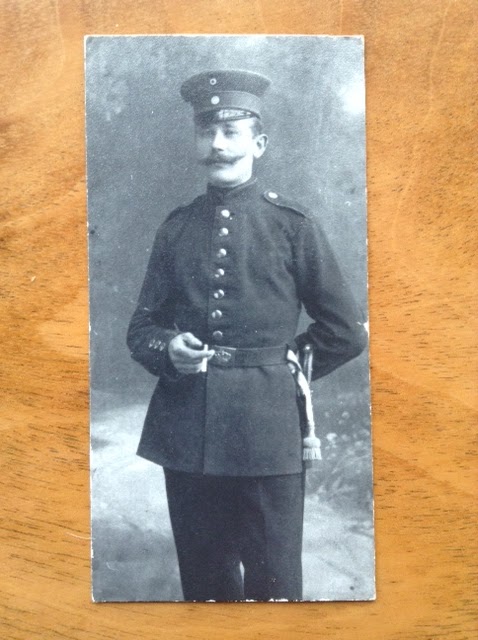
I particularly remember realising early on that my family background was somewhat unusual. It seemed as though every dinner would uncover another city or region of the world that was somehow connected to our genealogy. I suspect that being born in Ghana of an English mother and Swiss father, himself born in Lebanon to a Sicilian Italian mother and Swiss French father, and with third generation ancestry in the former Prussian city of Königsberg, the modern-day Russian Baltic Sea enclave of Kaliningrad, was always going to have some influence on my view of the world and the insatiable desire I have to explore its every corner.

And at the centre of it all was my father. As the eldest of four brothers in the middle of the three generations present, he was both the family and linguistic linchpin. After chastising me in English for unsuccessfully attempting to steal a third Kinder egg from my grandmother's cupboard, he would respectfully reply to his father's question about his work day in French before discussing the latest Italian football results with his mother - in Arabic. Growing up speaking four different languages in one day was not abnormal to me; I was only doing what my father was doing.

Although never officially a contest, I could not help but measure myself and compete against him linguistically: what a benchmark to measure oneself against, after all. He had me in Italian, I edged him in German and English, and we probably shared the honours in French. But the Arabic, the Arabic! Even in later years, as I learnt Spanish to an adequate level and pretended to have equalled the same magic number of languages as my father, I knew deep down that similarly to away goals in European football, the language of Islam counted double, at the very least.

And this is where my favourite entertainment was to be found: in the Middle Eastern roots of our Western European family. As a child, I would never tire of asking him to write in Arabic, watching enthralled as his hand would move unnaturally from right to left; or teach me words that to this day would get my tongue cut out or a good old-fashioned stoning in most of the Levant; most enjoyable for my mother and I, however, would be seeing the stunned face of a waiter in a Lebanese restaurant as the white infidel would order a three course family meal in faultless North Beiruti dialect.

Whilst my father may have questioned until his very last breath why his only child had secured neither partner, offspring, house ownership, pension plan or pet Labrador by the grand middle age of 41, choosing instead to spend every disposable pence, cent or piastre on such frivolous a pursuit as global exploration, I like to think that he understood the reason to my madness. From the look on his face, and his response as I announced that I was resigning from my job of fourteen years, I know he did.

And so I find myself about to return to Africa, to continue my quest to conquer the continent of my birth. Only I will be doing so with a heavy heart, knowing that my father will be following my adventures from even further away than when they first began at the end of January. But with each new backpacker I meet, and every opportunity I am given to share selected slices of our extraordinary family history, Dad's memory will live on throughout my travels. With every year that passes, I realise there is a little bit more of my father in me than  I previously thought, and of that I am proud.

Great-grandfather Paul-Otto Knoll, officer in the Prussian Army (Königsberg, Prussia - 1914)

My paternal great-grandparents taking the family pets for a walk... (Cairo, Egypt - 1919)

Pre-Mum ladykiller in action (Beirut, Lebanon - 1960)

Father and son at home... (Accra, Ghana - 1975) 

Mood song: Jailhouse Rock - Elvis Presley
Mood food: Lebanese mezze

Saturday, 27 February 2016

Softly, Softly, Catchee Monkey...

"We have a lead, they also stole our tampons." There is a calm, controlled authority about Chelsee's voice that reignites a tiny flicker of hope in me, where none ought to exist. Without a moment's hesitation, she disappears into the undergrowth and I follow her lead. Lotte, meanwhile, holds the fort under the beach windbreak in the event of an unlikely counter-attack by our cunning opponent.

With a two decade track record in losing electronic equipment creatively whilst travelling, it was only a matter of time before something happened in Africa. On this occasion, however, I have outdone even myself. Having returned to our beach headquarters to see our bags unzipped, my phone missing, Chelsee's passport out in the open and most of our possessions scattered haphazardly all over the blanket, I automatically assumed that an opportunist local had taken advantage of our short walk to the sea to misappropriate some of our belongings. But a closer inspection of the crime scene reveals a half-eaten chocolate bar, a shredded bag of sweet chili Fritos and the disappearance of a dozen of Tampax's finest. The perpetrators of this misdemeanour become apparent: we have been robbed by a troop of monkeys.

Once I recover from both the absurdity of the situation and the by now familiar sinking feeling, I cannot help but get carried away by the enthusiasm of my Dutch travel companion. As a veterinary nurse with first-hand behavioural knowledge of the vervet monkey, she is the ideal supersleuth to pursue this investigation; within minutes of tracking their movements, we are entering the monkeys' natural habitat deep inside the tree canopy and find their lair almost immediately. It is a veritable treasure trove of discarded stolen goods not to their taste: shoes, bangles and other assorted shiny objects, even a leather satchel; but no mobile phone, sadly.

Whilst I would typically use such a situation to curse either my own stupidity or the evil of mankind, on this occasion I am not even upset; in fact I am more than a little amused by our fruitless search and rescue operation. And I am simply happy to be here, in such fine company, because I shouldn't be here. Two nights ago I was in Swaziland, with the intention to move on to Mozambique the following day. But a chance hostel discussion between the two Dutch girls I had already met and Tom, a gigantic Norwegian viking who had just sat down to eat his dinner at our table, led to an offer of a lift to Sodwana Bay, a South African diving mecca in almost completely the opposite direction to that which I had intended to take.

The most precious commodity of any extended backpacking trip is not money or time, however beneficial to its overall enjoyment and duration they both may be, but the sheer unadulterated freedom that comes of having no fixed itinerary, logistical deadline or pre-booked accommodation to respect. As distant and semi-faded memories of  'The Real World', 'The Office' and 'The Daily Commute' briefly remind me of the shackles of normality, I choose to seize the first real opportunity for unplanned adventure on this voyage: a spontaneous road trip to an unknown destination with three total strangers.

In a tiny Ford Figo splitting at the seams with backpacks and bags, the Norwegian man-mountain and I slot Tetris-like into the available space: the Backseat Boys are born, to be driven by the Spicy Girls. The six hour journey passes by in a non-stop medley of group sing-along and the unexpected bonus of a free safari as the state road to the coast allows us passage through a private game reserve. But it is after the giraffes, rhino and buffalo, at our destination that the prize for my itinerary improvisation truly reveals itself: the last available accommodation at our chosen lodgings is a four bed beach villa, complete with kitchen and outdoor barbecue area: available and ours for the princely sum of £6.50 per person.

And so, when I lose the thirty-ninth mobile phone of my adult life to a bloody vervet monkey the following day, I still manage to smile and enjoy our afternoon at the beach. Because I have the evening to look forward to; between mixing drinks, setting up the braai and bonfire, marinating vegetables and preparing side dishes, Tom, Lotte, Chelsee and I are each allocated our dinner soirée duties. This is our time, our place, and the interaction is natural and effortless, like flatmates on the shortest of tenancies.

With our two hammocks swaying in the gentle evening breeze and the wonderful aroma of porterhouse steaks sizzling on the braai, this is one of those moments and decisions that define my very philosophy of travel: not the world heritage sites or wonders of the world; not the beautiful gothic cathedrals or towering medieval fortresses; not even the secluded unspoiled beaches; no, it is just the simple, spontaneous and genuine pleasure derived from sharing a seaside cabana and a short escapade with three complete but like-minded strangers, playing cards and drinking cocktails late into the night in front of the glowing embers of a sandpit fire.

Home sweet home

Braai, sandpit, hammocks, what more could we want?

The braai masters at work

Nothing like a good book burning to close out an evening...

Thanks for the monkey warning, South Africa. Thanks a lot...

Mood song: Feuer Frei - Rammstein
Mood food: porterhouse steak, barbecue seared

Sunday, 21 February 2016

The King And I

"The King, officer. Where is the King?"

We are at a crossroads of dirt tracks somewhere in Eastern Swaziland and the last signpost to the Hlane Royal Residence was 27km back. With no map and two South African stoners driving us in their battered bakkie, the chances of success in this particular mission were always going to be slim. Even so, we are genuinely surprised when the police officer tells us that the His Majesty Mswati III is not here at Hlane, but at his other Royal Residence at Buhleni, in the north of the country and at least another two hours' drive away.

We are on a quest to find the Marula Festival, a cultural event little known outside the smallest country in the Southern Hemisphere, but of great importance to Swazi culture. Whilst the marula fruit can also be found in most other Southern African countries, here it is the proud focus of a national harvest celebration. The fruit is distilled into a homemade 'beer' that ranges between 10% and 20% in strength, and the King holds an entire festival weekend at each of his two residences. Only after His Majesty has adjudicated over the finest marula gifts presented to him by his adoring subjects may the beer be consumed and the party begin.

After a brief negotiation with our drivers, my hostel roommate Iris and I agree to cover the entire fuel costs in order to get to our destination. I have cancelled a rafting trip to discover this festival, and the coincidence of our timing makes this too good an opportunity to miss. Besides, another two hours in my favourite mode of transport - the back of a pick-up truck - is an unexpected bonus that allows me more time to appreciate this unexpectedly beautiful country. As we bounce around the beautiful rolling hills with a beer in hand, we are treated to some stunning alpine scenery reminiscent of the country's European near-namesake. That the panorama is accentuated by a distant backdrop of almost constant lightning makes this a truly unique experience.

We finally arrive at the festival grounds to find a scene of carnage and devastation. It is clear that much marula has been consumed as swaying bodies trip over the already prone. We are stopped by every single Swazi group we encounter, for photos and a taste of their own homebrew. Having sampled its delights the previous night, I have come prepared with my antacids to counter the effects of the beer. To no avail: the liquid slides down my oesophagus like lava and I experience self-immolation from within. After what feels like a lengthy papal tour of duty, we beat a hasty retreat to the ceremony grounds and witness a breath-taking celebration of Swazi national identity. More than five thousand women in national dress stand in formations of Roman battalions, their chanting and swaying accompanied by the entire crowd.

An older gentleman sitting to my right strikes up conversation with me, telling me of his six months spent in London in the 1980s before asking me how I am enjoying the ceremony. It is a genuine delight and honour to witness such a cultural event first hand, I reply, but what I would really like to do is meet the King. Unexpectedly, he gets up and signals to me to follow him. We approach the telecommunications vehicle of the country's national broadcaster, and enter into conversation with a senior production manager who appears to have had one cup of marula too many. For the hand of a white English girl, he will help me meet the King. Thinking quickly, I ask whether a white French girl will do the trick, my Anglo-Saxon resources being pretty thin on the ground. He agrees, remarkably, and places a Swaziland Broadcasting press pass into my hand. "Come back at 9pm and we will go to meet His Majesty." I return to where my friends are sitting and smile innocently at Iris. A quick toilet break, I tell her.

Just as I am starting to work on my curtsey, however, the winds of an approaching storm pick up dramatically and the sandy floor of the festival grounds takes to the skies. At first, it is only the lesser hardy amongst the crowd that shuffle back towards the safety of the marquees, but a hurried announcement over the PA signals an abrupt end to the proceedings. The King and his entourage adjourn to the nearby palace and the plebiscite returns to their vehicle for the two hour drive home. As the night flashes with electricity, I reflect on what might have been. Never mind, Your Majesty, you may get to meet me next time.

Here's your marula, Sir...
 
The boys enjoying the show
 
 Girls just wanna have fun...

The only way to travel
 

Mood song: Return To Sender - Elvis Presley
Mood food: Marula beer


Friday, 19 February 2016

Backpacker Life [i] - The Equipment

The Backpack:
Quite simply the raison d'être of the backpacker. Its mere ownership qualifies for backpacker status regardless of age, social standing or number of children born since the last expedition. The internal capacity fluctuation challenges all laws of physics through its unexplainable reverse black hole properties: the exact same contents that fit in neatly with room to spare one day would not fit in a 40' Maersk shipping container the next. Often mistakenly assumed to be the backpacker's most important possession (see 'The Daypack'), the backpack will spend much of its travel existence out of its owner's sight - in hostel lockers or storage rooms, on the roof of a combi van or in the hold of a long distance bus - and can therefore not contain any of the backpacker's most precious items. Whilst the loss of the backpack would undoubtedly present a sartorial dilemma, the threat to onward travel would not be significant.

Life in one bag, emergency toilet paper in the other...

The Daypack:
Of all the backpacker's essential items of equipment, the daypack presents the biggest challenge. Whilst the holy trinity of mobile phone, wallet and passport (in ascending order of importance) will almost always be held on the backpacker's person, laptop, iPad, camera and guide book must go in the daypack. And the daypack must therefore accompany the backpacker wherever he/she goes when on the move, inducing a constant state of self-conscious fear known as Daypack Paranoia (DP). It is not uncommon, many years after a particularly acute bout of DP in downtown Managua, for a retired backpacker to wake up in a cold sweat at 3am feeling to the side of the bed for a non-existent daypack. There is no cure for DP, other than booking another trip.

Constant paranoia...

The Combination Padlock:
The unsung hero of the backpacker's defence armoury, the combination padlock provides unjustified peace of mind that all valuables are safe locked within a dormitory made of second hand aluminium foil and decomposed balsa wood. Usage requires a PhD in mechanical engineering and the night vision of a Sierra Madre mountain lynx when returning to a pitch black room after a night out on the coconut brandy. Not to be confused with the common key padlock, unless in possession of a pocket hacksaw when the key cannot be located within any of the 79 backpack zip compartments twenty minutes before the departure of the 2am night bus to Mogadishu.

Ethnic Jewellery:
Permissible materials include leather bracelets taken from endangered species, shark tooth pendants fished unsustainably from within damaged coral reefs, and any ivory. Fairtrade and responsibly sourced materials are frowned upon. Not to be worn for longer than seven days upon returning, unless a return to Africa/SE Asia/Latin America is imminent. The backpacker must be able to relate at least one sentimental story regarding memento provenance, for example a 16 bed dormitory one night stand parting gift, or having haggled an additional 3p from a one-legged Angolan civil war orphan. Not to be confused with seven year old Glastonbury festival wristbands long riddled with fungal subcultures and at least one minor STD.

Peace, man...

The Telecommunications Centre:
Mobile phone, iPad, iPod, camera, portable speaker; each conveniently comes with a different adaptor and plug; and each will be lost at some point during the trip, typically with less than 5% of battery remaining on the device and when camping in the middle of the Central Kalahari Game Reserve. Total expenditure of replacement chargers or USB cables will usually exceed the original cost of the trip, or the GDP of Guinea-Bissau, whichever is greater.

Getting wired

Paper literature:
Modern day usage in its classic sense is almost obsolete, save for a handful of die-hard laptopless anti-Kindle technophobes. Now only for show, strategically positioned in the bus seat back pocket or on the communal breakfast table so as to render the title visible. Extra points are awarded for material in a language other than the backpacker's mother tongue, obscure short collections of 19th century Danish plays, or any self-help topic. 

Je prétends, donc je suis...

Emergency Toilet Roll & Wet Wipes:
Trips to any third world countries as well as provincial France MUST NOT be undertaken without these two items.

Mood song: Vagabond - Beirut
Mood food: sweet chili Fritos